
they negatively impact the adaptability (vulnerability) of trees to extreme events (e.g. droughts) due to the destruction of fine root systems, and exposing trees to water stress.
Problems to be faced
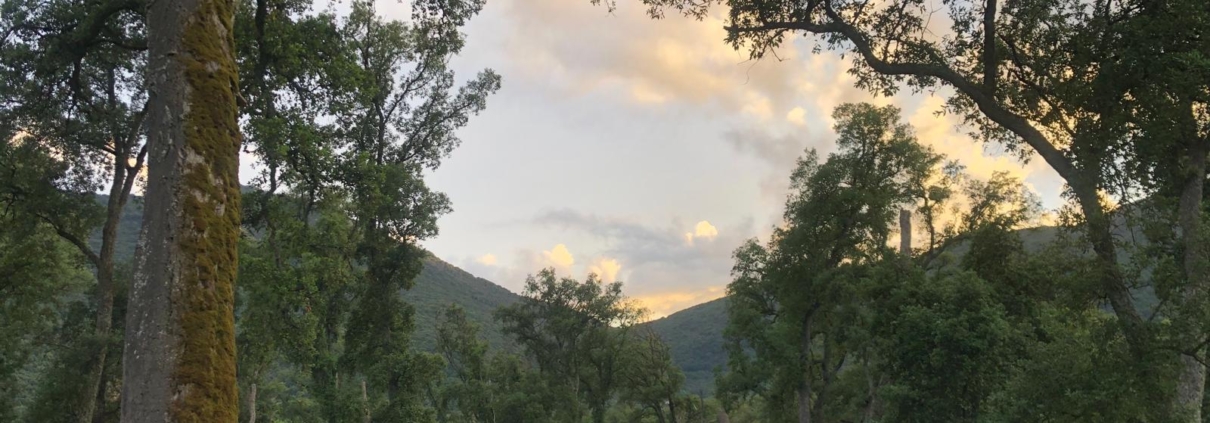
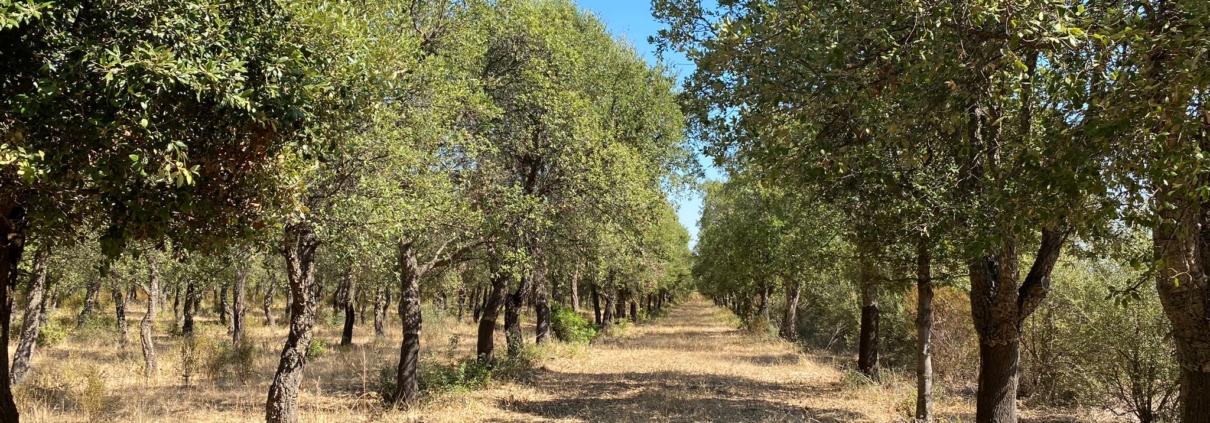
Tree species in the Fagaceae family, particularly evergreen oaks and chestnut, form predominantly pure and mixed forests in southern Europe and the Mediterranean basin.
Holm oak (Quercus ilex subsp. ilex and ballota) and cork oak (Quercus suber) are the two dominant evergreen oaks, with the former extending its geographic range from the Iberian Peninsula to Turkey and from central France to the coastal region of North Africa.
The distribution range of cork oak is more restricted and includes the Iberian Peninsula, North Africa, and scattered areas in France and Italy.
In the Mediterranean basin, they characterize important and fragile ecosystems such as the Dehesa (in Spain) or Montado (in Portugal), which account for more than 3 million hectares only in the Iberian Peninsula (up to 2,2 million ha in Spain and 889.000 ha in Portugal).
They host agroforestry activities, including cork production and pig breeding, and often form important touristic attractions.
Sweet chestnut
The chestnut tree (Castanea sativa) is a large deciduous tree found mainly in the Mediterranean region. Chestnut is an economically important tree used for both nut and wood production. Its distribution range extends from the Iberian Peninsula to the Caspian Sea and from Germany to North Africa.
In Europe it covers an area of more than 2.5 million hectares (about the size of Sardinia Island) with 0.5 million hectares of those being devoted to fruit production[1].
Most of the area (89%) is concentrated in a few Mediterranean countries (Italy, followed by Spain, Portugal and France).
All these Fagaceae ecosystems provide important services to mankind: besides their agroforestry products and opportunities for recreation, they have important functions in water, air, soil and climate regulation.
Alien Invasive Forest Phytophthoras AIFP
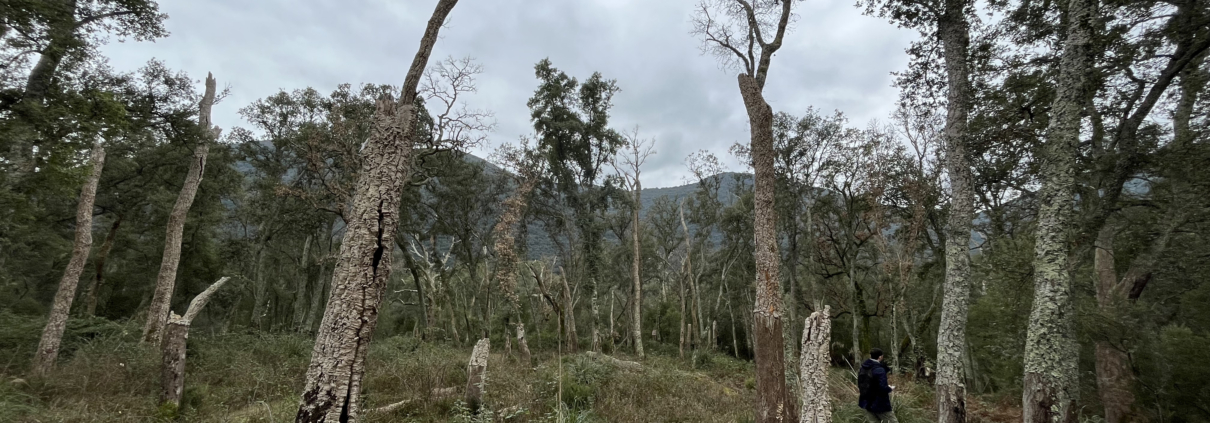
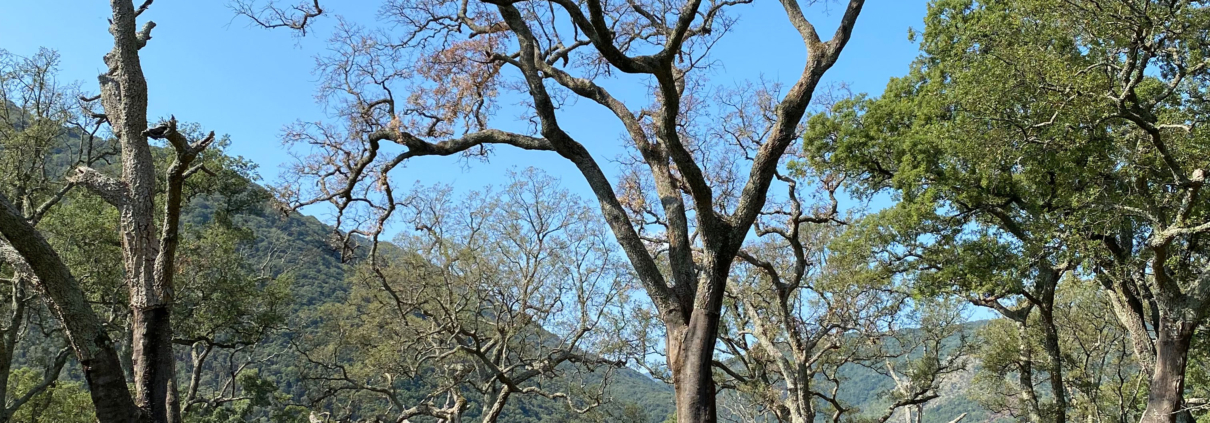
Alien Invasive Forest Phytophthoras (AIFPs) are among the most relevant biotic stressors of evergreen oak and chestnut ecosystems in Southern Europe and Mediterranean basin.
Phytophthora cinnamomi is currently the most widespread and impactful agent of root and stem canker in these ecosystems. Indeed, climatic changes are gradually modifying the main meteorological parameters in Mediterranean and temperate forest ecosystems.
This entails an intensification in recurrence of extreme events (e.g. drought and flooding) and an increase of cardinal temperatures (min, mean and max) which is favouring the migration of AIFPs and their introduction and adaptation in new environments.
AIFPs like P. cinnamomi are amplifying the effects of climate change and reduce forests’ climate mitigation potential

Views and opinions expressed are those of the author(s) only and do not necessarily reflect those of the European Union or CINEA. Neither the European Union nor CINEA can be held responsible for them.